** SilcoNert 2000 is also sold under the Sulfinert® name
Reliable hydrogen analysis starts before the sample reaches the detector. At trace concentrations, sulfur compounds can interact with the surfaces inside sampling and analytical equipment, leaving the analyzer with less contamination to measure than was present in the original gas. Our SilcoNert® 2000 coating helps reduce those surface interactions so analytical systems can deliver more representative results.
Published SilcoTek data and the European MetroHyVe research programs show why surface selection matters for hydrogen quality testing. The findings connect a practical design choice - treating the sample-contact surfaces - to the ability to retain reactive impurities through collection, storage and analysis.
Why Trace Sulfur is a Flow Path Challenge
Hydrogen sulfide and other sulfur compounds can poison catalysts used in hydrogen applications. Detecting them reliably is therefore essential, yet an untreated metal flow path can adsorb the very compounds an analyst needs to measure. The consequences can include low readings, delayed response and persistent carryover as retained sulfur later leaves the surface.
SilcoNert 2000 is a functionalized amorphous silicon coating applied by chemical vapor deposition. The process treats internal surfaces of components such as tubing, valves, fittings, regulators and sample vessels, making it useful for building an inert analytical flow path.
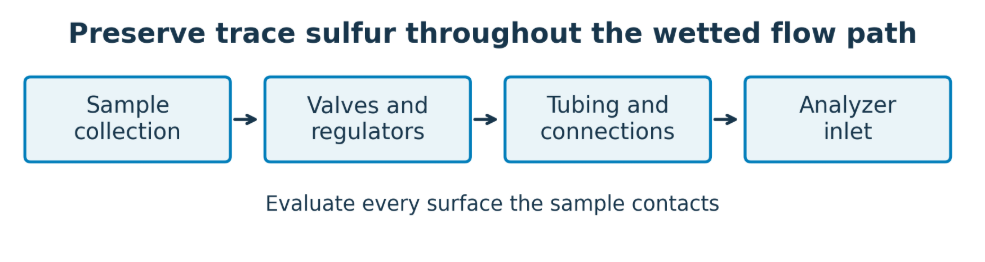 Figure 1. Conceptual sampling path. Evaluate the wetted surfaces from collection through the analyzer inlet; the illustration is not a specific instrument layout.
Published Sulfur Data Show the Value of Inert Surfaces
In SilcoTek’s sulfur sampling application note, a 17 ppbv H2S storage comparison showed retention in SilcoNert 2000-treated stainless steel cylinders over seven days, while H2S was completely adsorbed in the untreated cylinder within 24 hours. The note also reports lower sulfur uptake and memory effects in coated tubing. These supporting sulfur-handling studies complement the hydrogen-specific research discussed below.
MetroHyVe 2 Connects Coating Choice to Hydrogen Measurements
MetroHyVe 2 provides hydrogen-specific evidence. The 2023 sampling-container guide reports using a fully SilcoNert-treated injection system for samples and standards, plus SilcoNert-treated transfer components during mixture preparation. This demonstrates use in the measurement workflow, rather than a coated-versus-uncoated analyzer trial.
The valve comparison is particularly instructive. In SGS-finish aluminum cylinders without added water, reported H2S stability increased from 1.5 months with an untreated stainless steel valve to four months with a SilcoNert-treated valve.
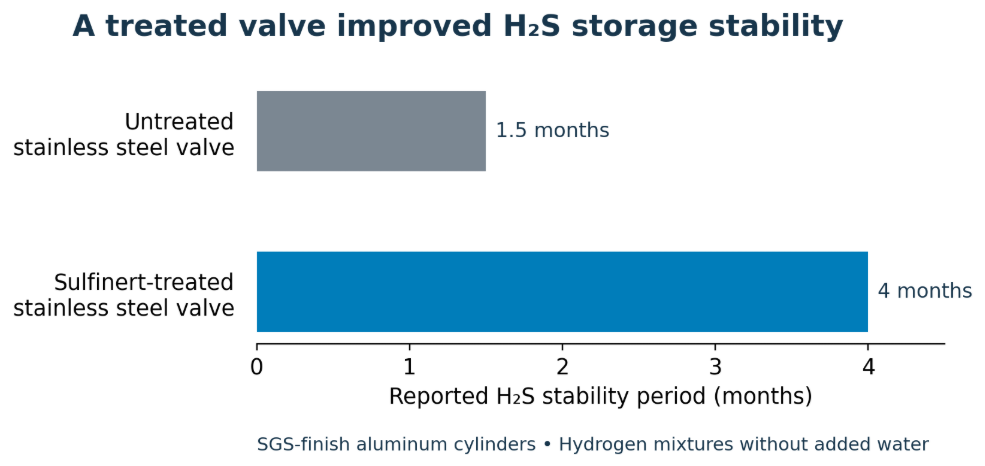 Figure 2. Redrawn from MetroHyVe 2 Deliverable D5, section 3.2.2 and Table 5. Four months was the study duration, not a demonstrated maximum lifetime.
The broader results remain condition-dependent: SilcoNert-treated stainless steel cylinders supported H2S storage for about 1.5 months without added water and four months with water. Aging affected performance, and the study used one cylinder per type. These findings support application-specific validation rather than a universal storage guarantee.
Earlier MetroHyVe Guidance Adds Useful Context
The earlier vessel-suitability guide hosted on the MetroHyVe 2 website comes from the original MetroHyVe project. Its short-term hydrogen study found H2S remained stable for at least six days after transfer into both SilcoNert-treated and untreated stainless steel cylinders. The starting H2S level was approximately 22–24 ppb. This result reinforces the need to select the coating for the specific analyte and concentration. It does not establish that every coating, or every untreated surface, behaves alike.
The guide also distinguishes retention after filling from losses during collection. A sample that becomes stable after losing part of its impurity content can still produce a misleading result. Sample recovery and subsequent stability both matter.
Design the Analytical System Around Sample Recovery
For an analyzer manufacturer or hydrogen testing laboratory, the practical implication is to review the entire wetted path. A coated sample vessel cannot compensate for every reactive surface downstream. The MetroHyVe 2 valve review specifically identifies valve passivation as potentially critical for reactive species at low concentrations and notes that the valve and vessel may require separate consideration.
A useful qualification plan should challenge the assembled system with the sulfur species and concentrations of interest in hydrogen. Measure recovery at first introduction, response time, and washout after switching to clean gas. For transported samples, include the expected holding time and moisture conditions. These are application recommendations: the published storage studies do not quantify the response time of every analyzer configuration.
SilcoTek can help evaluate suitable components for SilcoNert 2000 treatment and identify where exposed surfaces may be limiting trace analysis. Bring the actual flow path, operating conditions and target impurities into the discussion so coating selection can be tied to the measurement you need.
Silcolloy Offers a Separate Benefit for Hydrogen Permeation
SilcoTek’s hydrogen-related data also extend to transport through metal. In an Idaho National Laboratory report, Thomas Fuerst tested deuterium, a hydrogen isotope, through coated and uncoated 316 stainless steel. Silcolloy® produced a permeation reduction factor of 19.0 ± 2.4 from 300–600 °C - approximately 20x lower permeation under the study conditions.
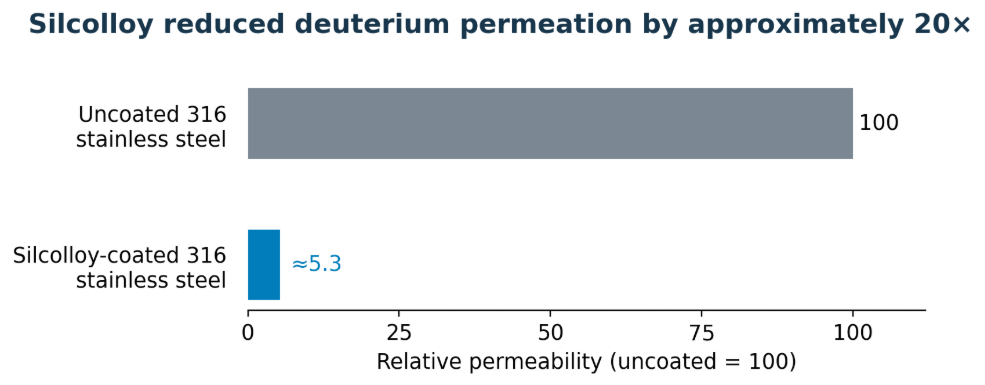 Figure 3. Illustrative normalization using INL’s reported reduction factor: 100 ÷ 19 ≈ 5.3. This is a summary comparison, not a temperature-resolved dataset. Tests used deuterium and 50.8 µm-thick 316 stainless steel specimens with 10 kPa upstream pressure.
Heating above 600 °C degraded Silcolloy’s barrier performance. These results support evaluating Silcolloy for permeation control within the tested range; coatings do not establish prevention of hydrogen embrittlement or qualify a complete pressure-containing assembly. SilcoNert’s analytical inertness and Silcolloy’s permeation resistance address different engineering needs.
Planning a hydrogen sampling or analyzer project? Contact our team for more information!


