Stainless steel is valued across industries for its corrosion resistance, durability, and clean appearance. From semiconductor manufacturing and pharmaceutical processing to analytical instrumentation and energy production, stainless steel is often the material of choice for components exposed to demanding environments.
However, not all stainless steel surfaces are created equal. Manufacturing, fabrication, welding, machining, and handling can all introduce imperfections that affect more than just appearance. Surface defects can become sites for corrosion, contamination, particle generation, and even adsorption of reactive compounds, reducing equipment performance and reliability.
Understanding these common imperfections - and how they can be addressed - is an important first step in maximizing the performance of stainless steel components.
Why Surface Quality Matters
The corrosion resistance of stainless steel comes from a thin, naturally occurring chromium oxide layer that forms on its surface. This passive layer protects the underlying metal from corrosion, but it can be compromised by fabrication processes, contamination, or mechanical damage.
Even microscopic surface imperfections can create localized areas where corrosion begins, contaminants become trapped, or reactive chemicals interact with the metal surface. For applications requiring high purity or precise chemical measurements, these seemingly minor defects can have significant consequences.
This is especially important in industries such as:
- Analytical instrumentation
- Semiconductor manufacturing
- Biopharmaceutical processing
- Energy production
- Chemical processing
- Environmental monitoring
In these applications, maintaining a clean, chemically inert surface is just as important as maintaining the structural integrity of the component itself.
Common Stainless Steel Surface Imperfections
Embedded Iron Contamination
During fabrication, stainless steel can become contaminated with free iron from carbon steel tools, wire brushes, grinding wheels, or other manufacturing equipment. Unlike stainless steel, free iron readily oxidizes, creating rust spots that may appear long before the stainless steel itself begins to corrode.
Removing embedded iron typically requires chemical cleaning or passivation to restore the protective surface.
Heat Tint
Heat tint forms during welding when elevated temperatures alter the composition of the protective chromium oxide layer. The resulting discoloration is more than cosmetic. Heat tint often indicates a reduction in corrosion resistance because chromium has been depleted from the affected area.
Proper pickling and passivation are commonly used to restore corrosion resistance after welding.
Weld Spatter and Arc Strikes
Small droplets of molten metal created during welding can adhere to nearby surfaces. Arc strikes, caused by accidental contact between the welding electrode and the base material, also damage the passive layer.
If left untreated, both conditions can become initiation points for corrosion and should be removed before the component enters service.
Surface Scratches and Mechanical Damage
Machining marks, scratches, dents, and abrasions increase surface roughness and expose fresh metal. While these imperfections may seem minor, they increase the available surface area where corrosion or chemical interactions can occur.
For analytical sampling systems, rougher surfaces can also increase the likelihood of analyte adsorption, making accurate low-level measurements more difficult.
Sulfide Inclusions
Some stainless steel grades contain naturally occurring manganese sulfide inclusions that improve machinability. Although beneficial during manufacturing, these inclusions are often less corrosion resistant than the surrounding metal and may become preferential sites for localized corrosion.
Organic Residues and Processing Contamination
Cutting fluids, lubricants, polishing compounds, fingerprints, adhesive residue, and other contaminants are common after fabrication. If not thoroughly removed, these materials can interfere with passivation, reduce coating performance, or introduce unwanted contamination into high purity systems.
Proper cleaning before installation, or before applying a coating, is essential for achieving consistent performance.
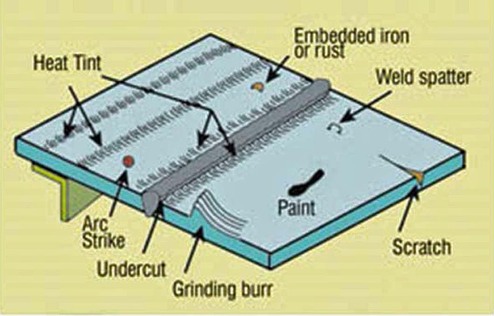 The figure above illustrates the common types of surface defects arising during steel fabrication.
Surface Imperfections Affect More Than Appearance
Many people associate surface defects with cosmetic issues, but their impact extends far beyond appearance.
Surface imperfections can:
- Initiate localized corrosion
- Trap particles and process contaminants
- Increase adsorption of reactive compounds
- Make equipment more difficult to clean
- Reduce the effectiveness of passivation
- Affect the long-term performance of protective coatings
In industries where trace-level measurements or ultra-clean processing are required, even microscopic defects can influence product quality and measurement accuracy.
Why Surface Condition Matters for Analytical Sampling
One area where surface quality becomes especially important is analytical instrumentation.
Reactive compounds such as sulfur species, mercury, ammonia, and other polar molecules readily interact with active stainless steel surfaces. Roughness, damaged oxide layers, and surface contamination provide additional sites where these compounds can temporarily adsorb before eventually releasing back into the sample stream.
The result can include delayed response times, inaccurate measurements, sample carryover, and inconsistent analytical results.
Creating a chemically inert surface helps minimize these interactions and improves sampling accuracy, particularly at trace concentrations.
Passivation Versus Surface Coatings
Passivation is an important step in preparing stainless steel for service. The process removes free iron and promotes formation of a uniform chromium-rich oxide layer that improves corrosion resistance.
However, passivation does not completely eliminate the underlying surface chemistry of stainless steel.
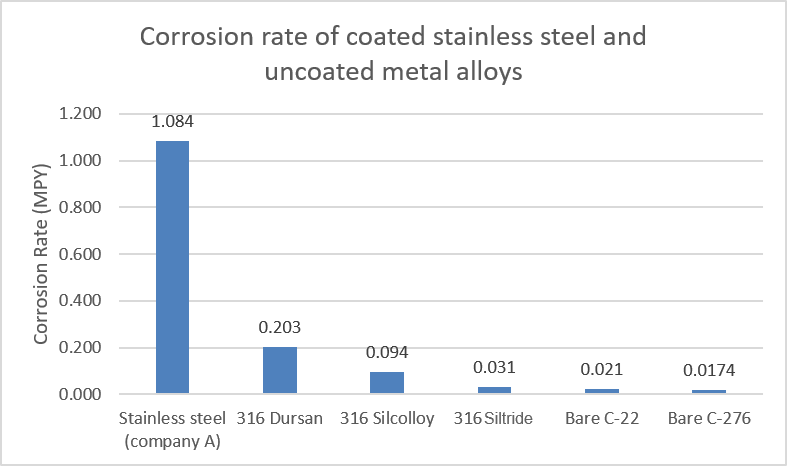
For applications requiring even greater corrosion resistance, reduced adsorption, or improved chemical inertness, engineered barrier coatings provide an additional level of protection.
SilcoTek's chemical vapor deposition (CVD) coatings form an ultra-thin, conformal barrier that follows the contours of the underlying surface while creating a highly inert, corrosion-resistant finish. Rather than replacing good manufacturing practices, these coatings complement proper cleaning, fabrication, and passivation to maximize component performance.
Surface Engineering Is About Optimizing Performance
Improving stainless steel performance involves more than simply polishing the surface. Surface engineering combines multiple processes - including fabrication, cleaning, passivation, electropolishing, and advanced coatings - to optimize the material for its intended application.
Each process contributes different benefits, and selecting the right combination depends on the operating environment, required cleanliness, corrosion exposure, and analytical performance requirements.
Starting with a Clean Surface
Surface preparation is critical before applying any high-performance coating. Oils, machining residue, polishing compounds, and other contaminants must be thoroughly removed to ensure consistent coating quality.
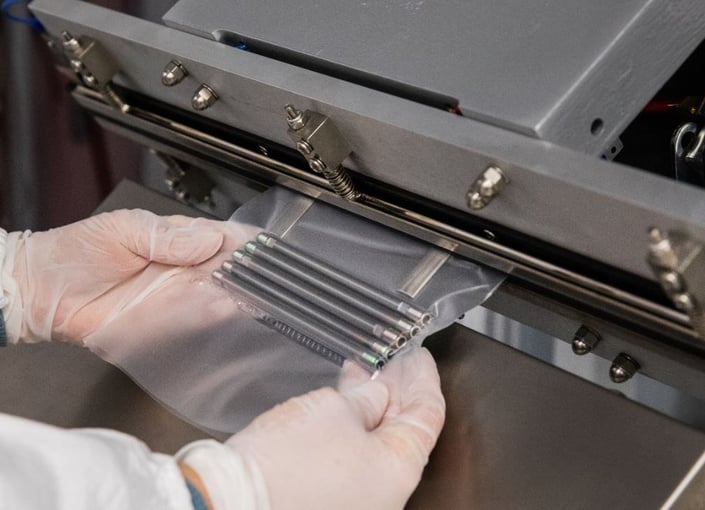
SilcoTek's cleaning procedures are designed to prepare components for the coating process, and cleanroom packaging services are available for customers whose applications demand the highest levels of cleanliness during shipment and installation.
Final Thoughts
Stainless steel is an exceptional engineering material, but its performance depends heavily on the condition of its surface. Manufacturing defects, contamination, and fabrication damage can reduce corrosion resistance, interfere with analytical accuracy, and shorten component life if left unaddressed.
By understanding common surface imperfections and incorporating appropriate cleaning, passivation, and advanced CVD coatings, manufacturers can significantly improve corrosion resistance, reduce contamination, minimize adsorption, and extend the service life of critical components.
Whether your goal is protecting process equipment, improving analytical measurements, or maintaining ultra-clean manufacturing environments, surface quality is the foundation of long-term performance.
Want more information about how to clean and care for your coatings? Check out our Owner's Manual for more information!