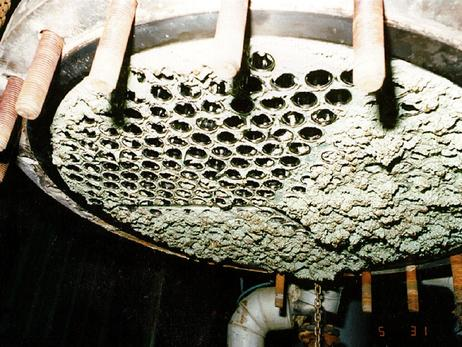
Fouling and corrosion are among the most persistent challenges in heat exchangers and process instrumentation. In high-temperature, reactive environments, these systems are constantly exposed to conditions that promote material buildup, surface degradation, and performance loss. Over time, this leads to reduced heat transfer efficiency, increased pressure drop, and ultimately, costly downtime and equipment failure.
At the core of the problem is surface interaction. As process fluids move through a heat exchanger, unwanted materials begin to accumulate on internal surfaces. This fouling layer acts as a thermal barrier, reducing the system’s ability to transfer heat efficiently and forcing operations to work harder to maintain performance.
Left unchecked, the impact compounds. Heat transfer continues to decline, cleaning cycles become more frequent, and maintenance costs increase. In many cases, facilities are caught in a reactive cycle of cleaning, repairing, and replacing equipment - without ever addressing the root cause.
Moving Beyond Reactive Maintenance
Traditional approaches to fouling and corrosion management focus on restoring performance after degradation has already occurred. Chemical cleaning, mechanical cleaning, abrasive blasting, and retubing are all commonly used strategies. While these methods can temporarily improve performance, they rarely return systems to their original condition.
Even after cleaning, residual deposits and surface damage remain. This allows fouling to redevelop quickly, leading to a continuous cycle of performance loss and maintenance. Over time, this approach becomes both inefficient and expensive, particularly for critical process equipment.
A more effective strategy is to prevent fouling and corrosion at the surface level before they begin.
A Surface-Level Solution: CVD Coatings
Chemical vapor deposition (CVD) coatings offer a fundamentally different approach by modifying the surface properties of the material itself. Rather than acting as a thick barrier, these coatings form an ultra-thin, conformal layer (typically just 1–2 microns thick) that is bonded at the molecular level to the substrate.
This process creates a dense, uniform silicon oxide-based surface that resists chemical interaction and reduces the tendency for materials to adhere. Because performance is driven by surface chemistry rather than coating thickness, CVD coatings can deliver protection without altering component geometry or restricting flow.
SilcoTek’s coatings take this a step further by tailoring surface energy. By reducing surface energy and increasing contact angle, the coated surface becomes less attractive to foulants and coke precursors, minimizing buildup before it can take hold.
Preserving Heat Transfer Efficiency
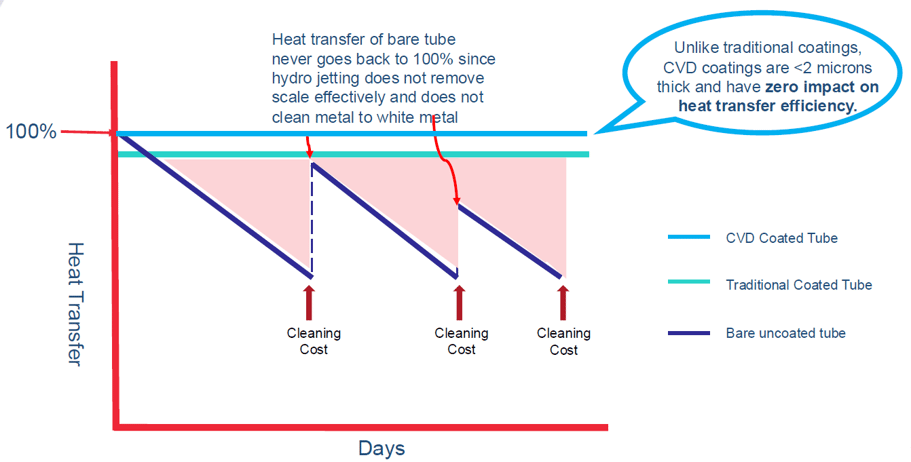
One of the biggest concerns with applying coatings to heat exchangers is the potential impact on heat transfer. Traditional coatings often introduce a thermal barrier due to their thickness, reducing system efficiency.
CVD coatings avoid this limitation entirely.
Because they are extremely thin, they have no measurable impact on heat transfer efficiency. In fact, performance data shows that coated tubes maintain significantly higher heat transfer over time compared to uncoated tubes. While uncoated surfaces experience steady decline due to fouling, coated systems remain stable, reducing the need for frequent cleaning and maintaining consistent performance.
This distinction is critical. Instead of trading protection for performance, CVD coatings enable both.
Demonstrated Reductions in Fouling
The anti-fouling performance of CVD coatings is supported by controlled testing and real-world applications. In calcium sulfate fouling studies conducted under simulated seawater conditions, silicon oxide-based CVD coatings demonstrated a 74% improvement in pressure drop compared to uncoated aluminum surfaces. This indicates significantly less deposit formation and flow restriction over time.
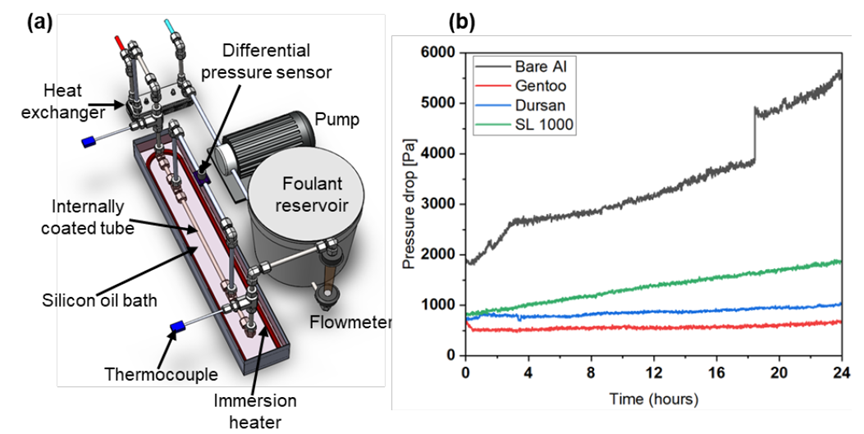
Acknowledgement: Tarandeep S. Thukral, Wentao Yang, Nenad Miljkovic, University of Illinois, Urbana Champaign, IL - USA
Additional testing in coal gasification filtration systems shows a similar trend, with coated stainless steel filters maintaining lower pressure drop and reduced fouling compared to uncoated alternatives.
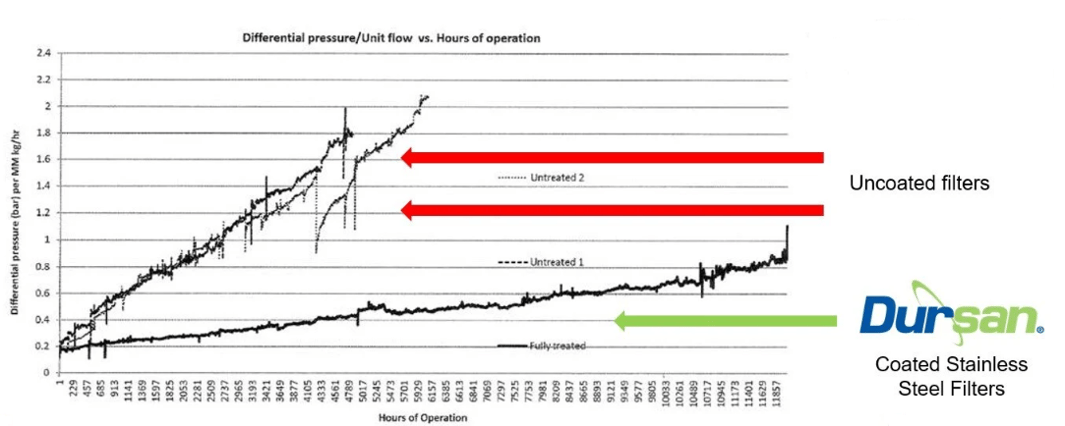
These results reinforce a key point: when surface interactions are minimized, fouling is dramatically reduced.
Enhanced Corrosion Resistance in Harsh Environments
In addition to fouling resistance, CVD coatings provide robust protection against corrosion.
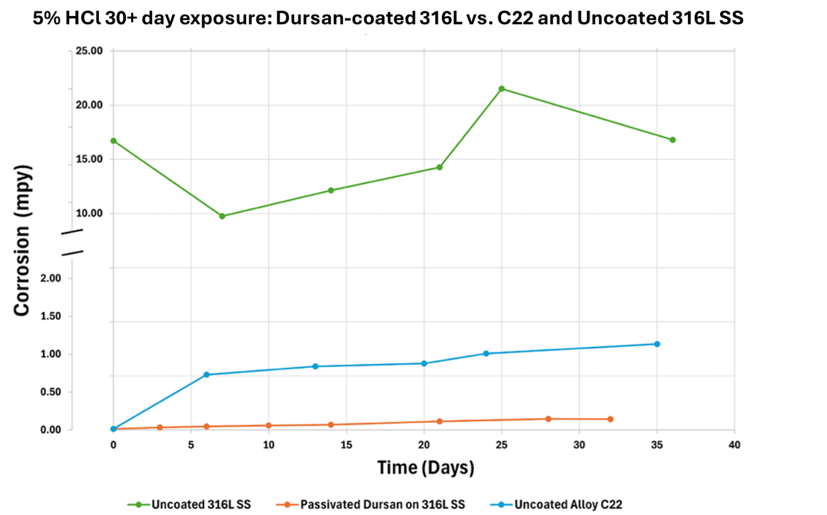
Testing under ASTM standards demonstrates that coated stainless steel significantly outperforms uncoated materials in aggressive environments, including sulfuric acid, hydrochloric acid, salt spray, and H2S exposure. Even under elevated temperatures and highly acidic conditions, coated surfaces maintain their integrity while uncoated materials degrade rapidly.
In some cases, coated 316L stainless steel can perform comparably to more expensive corrosion-resistant alloys. This creates an opportunity to reduce material costs while still achieving high levels of durability and performance.
Designed for Complex Systems
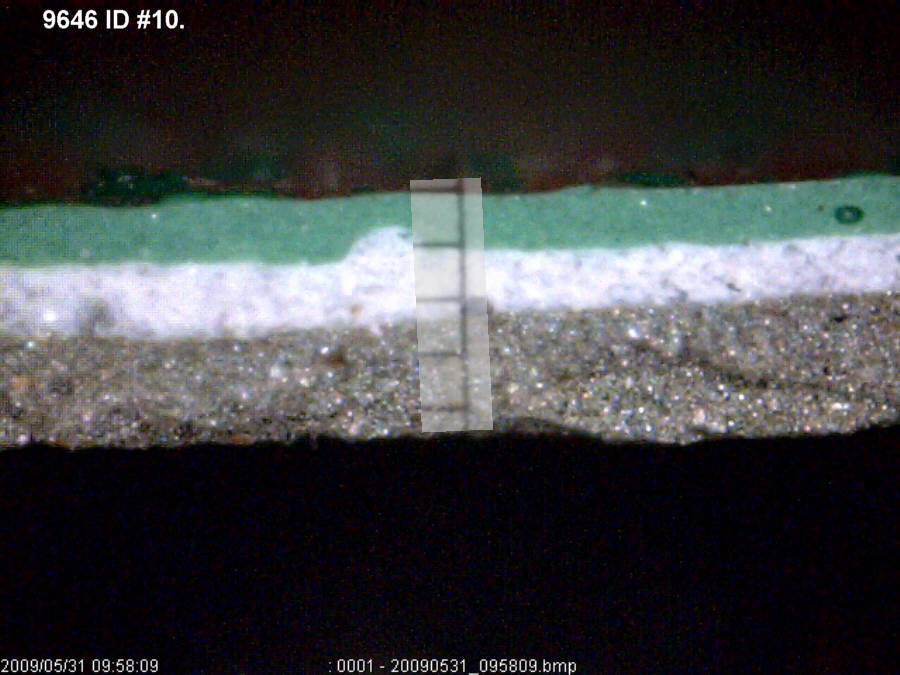
Another advantage of CVD coatings is their ability to uniformly coat complex geometries. Because the process is not limited by line-of-sight, internal passages, small diameters, and intricate components can all be coated evenly. This consistency is critical in applications where even small surface variations can impact performance. Below is a cross-section of coated material, showing SilcoTek's coating (the area in green) fully coating the surface of this part.
A Shift Toward Proactive Performance
For decades, fouling and corrosion have been treated as inevitable challenges managed through maintenance rather than prevented through design. CVD coatings represent a shift in that mindset.
By addressing the root cause of performance degradation, surface interaction, these coatings allow heat exchangers and process equipment to operate more efficiently, more reliably, and for longer periods of time. The result is fewer cleaning events, lower operating costs, and extended asset life, all without requiring major system redesign.
As coatings technology continues to scale for larger equipment, including full heat exchanger components, the opportunity to improve performance across existing infrastructure is becoming increasingly practical.
Have questions about coatings and your applications? Contact our knowledgeable coating experts today!
Follow Us on Social Media!