Per- and polyfluoroalkyl substances (PFAS) are among the most challenging analytes facing modern analytical laboratories. As regulations tighten and detection limits continue to decrease, laboratories are discovering that instrument sensitivity alone does not guarantee analytical accuracy. Every surface that contacts the sample - from transfer tubing to valves and fittings - can influence analyte recovery before compounds ever reach the detector.
While LC-MS and GC-MS systems continue to evolve, one often overlooked opportunity for improving performance is selecting inert flow path materials that minimize adsorption and preserve sample integrity.
The Growing Challenge of PFAS Analysis
PFAS are used in countless commercial and industrial applications because of their remarkable resistance to heat, water, and chemicals. Their environmental persistence and potential health impacts have led to rapidly expanding regulatory requirements. Laboratories must now quantify an ever-growing list of PFAS compounds at extremely low concentrations with high confidence and reproducibility.
Every analytical workflow - sample collection, preparation, and analysis - depends on maintaining sample integrity. Active surfaces within the flow path can adsorb analytes, reduce recovery, broaden peaks, and increase variability.
Selecting the Right Material for the Flow Path
Common wetted materials include plastics, glass, stainless steel, and inert coated stainless steel. Plastics offer flexibility but may outgas contaminants and often contain fluorinated materials. Glass is generally inert but fragile and can interact with some PFAS compounds. Stainless steel offers unmatched strength and pressure capability but contains active surface sites that promote adsorption of many metal-sensitive compounds.
Inert coated stainless steel combines the mechanical strength of stainless steel with a chemically inert barrier that minimizes analyte interaction while maintaining dimensional precision.
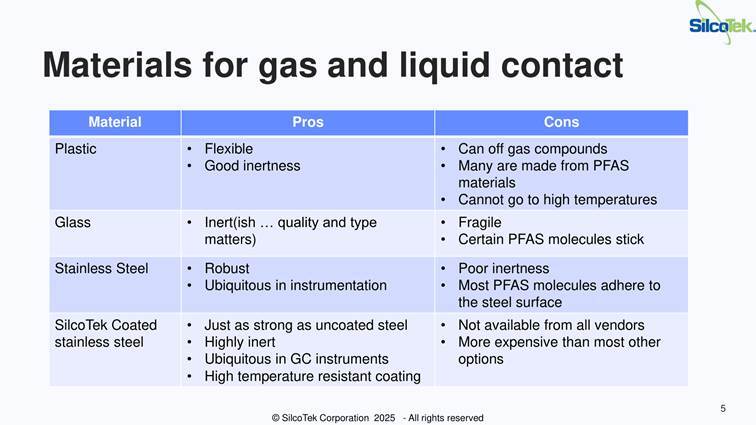
Figure 1. Comparison of common materials used in PFAS analytical flow paths.
Surface Chemistry Matters
SilcoTek's SilcoNert® and Dursan® coatings create ultra-thin amorphous silicon-based barriers that isolate analytes from active metal surfaces. SilcoNert is widely used in gas-phase applications, while Dursan provides excellent performance in demanding liquid analytical environments.
Gas-Phase Sampling: Reducing Transport Delays
Independent studies referenced in the Pittcon presentation demonstrate that tubing materials significantly affect transport delays for VOCs and gas-phase PFAS compounds. Reducing adsorption improves response times, peak shape, and measurement reproducibility.
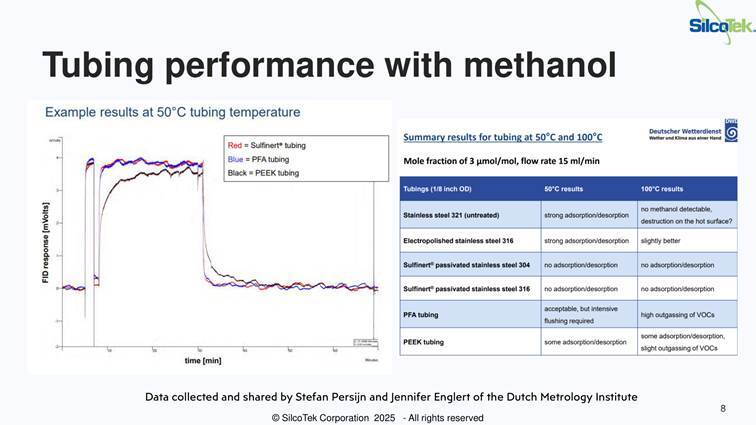
Figure 2. Tubing material influences analyte transport performance.
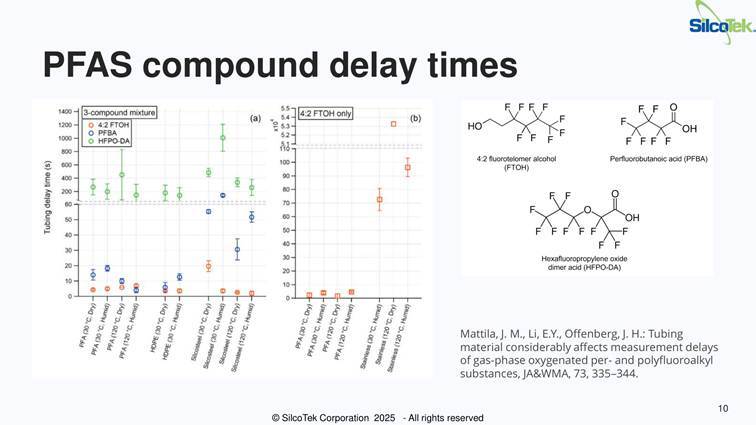
Figure 3. PFAS compound delay times vary significantly with tubing material.
Chemical Durability in Liquid Applications
Testing with trifluoroacetic acid (TFA) demonstrated the durability of inert coated stainless steel under aggressive liquid chromatography conditions. The coating maintained its integrity while providing improved chromatographic performance.
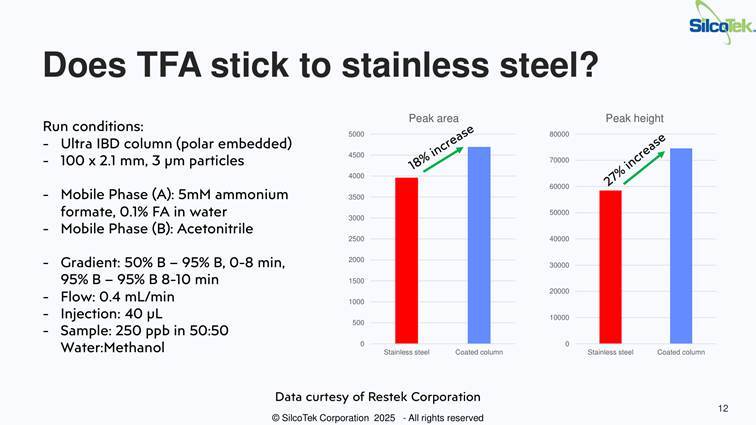
Figure 4. Chromatographic comparison using TFA demonstrates improved response with coated flow paths.
Improved Chromatographic Performance
Across numerous PFAS compounds, coated flow path components produced measurable improvements in chromatographic performance. The presentation reported peak area improvements ranging from approximately 3% to 70% and peak height improvements ranging from 5% to 75%, demonstrating the importance of minimizing surface interactions.
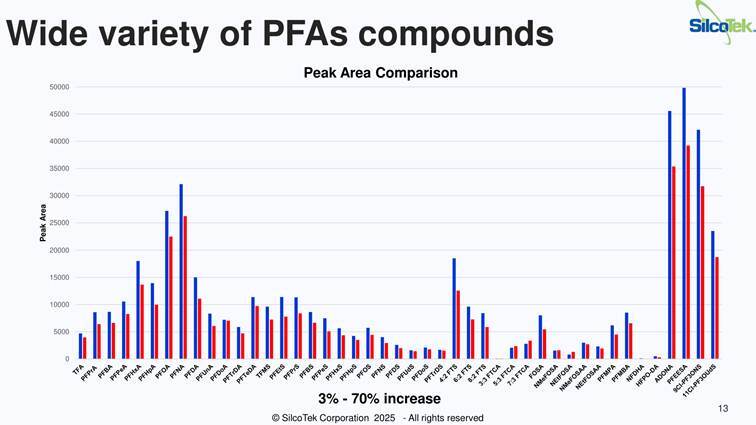
Figure 5. Peak area improvements across a broad range of PFAS compounds.
Metal-Sensitive PFAS Compounds
Several metal-sensitive PFAS compounds - including HFPO-DA, FOSA, PFUnA, and 4:2 FTS - showed particularly large increases in chromatographic response when inert coated components replaced uncoated stainless steel.
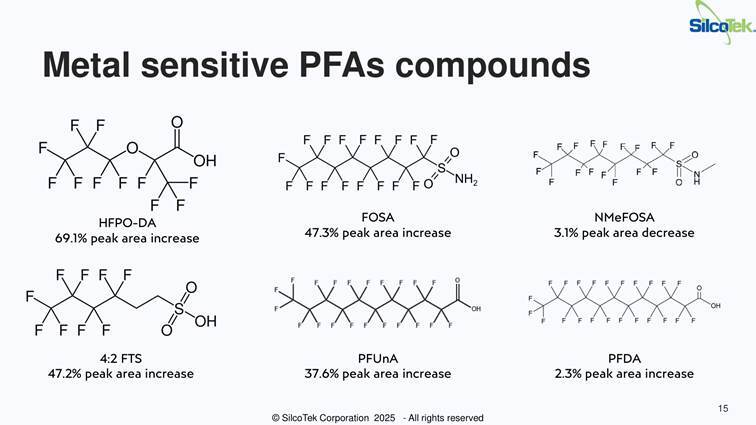
Figure 6. Metal-sensitive PFAS compounds benefit most from inert coated flow paths.
Key Takeaways
- Material selection directly affects PFAS analytical accuracy.
- Inert coated stainless steel reduces analyte adsorption.
- Improved peak area and peak height increase confidence in trace analysis.
- Optimizing the complete flow path can enhance existing LC-MS and GC-MS systems without changing analytical methods.
- SilcoNert inert coatings
- Dursan coatings
- Chromatography Solutions
- PFAS Application Notes
- Analytical Instrumentation Resources
Improve PFAS analytical performance by optimizing every wetted surface in your analytical system. Contact a SilcoTek applications engineer to discuss inert coating solutions for tubing, fittings, valves, sample loops, and other flow path components that can help improve chromatographic response and measurement confidence.
Want to see this presentation live? Join us at the Gulf Coast Conference!
Follow Us on Social Media!