When engineers need better corrosion resistance, improved wear performance, greater cleanliness, or enhanced chemical inertness, the first instinct is often to change the material itself. While selecting a different alloy can sometimes solve a problem, it is often an expensive and impractical solution.
That's where surface engineering comes in.
Surface engineering is the practice of modifying the surface of a material to improve its performance while preserving the desirable properties of the underlying substrate. Rather than redesigning an entire component, engineers can tailor the surface to meet specific application requirements.
From aerospace and medical devices to analytical instrumentation and semiconductor manufacturing, surface engineering plays a critical role in improving product reliability, extending service life, and enabling performance that would be difficult or impossible to achieve with base materials alone.
What Is Surface Engineering?
Surface engineering encompasses a broad range of technologies designed to alter the physical, chemical, mechanical, or electrical properties of a material's surface.
The goal is simple: create a surface that performs differently than the bulk material beneath it.
For example, a stainless steel component may have excellent strength and manufacturability but lack the chemical inertness needed for ultra-trace analytical measurements. Rather than replacing the component with an exotic alloy, engineers can modify the surface to create the desired interaction between the component and its operating environment.
Surface engineering techniques include:
- Electroplating
- Electropolishing
- Passivation
- Thermal spray coatings
- Anodizing
- Nitriding and carburizing
- Physical Vapor Deposition (PVD)
- Chemical Vapor Deposition (CVD)
- Polymer and ceramic coatings
Each approach offers different advantages depending on the performance requirements of the application.
Why Surface Properties Matter
In many applications, performance is determined not by the bulk material but by what happens at the surface.
After all, the surface is where components encounter chemicals, process streams, moisture, heat, friction, contaminants, and mechanical wear.
Problems often originate at the interface between a material and its environment:
- Corrosion attacks exposed surfaces.
- Reactive compounds adsorb onto metal surfaces.
- Friction causes wear and particle generation.
- Surface contamination impacts product purity.
- Rough surfaces create flow disruptions and product retention.
Even when the base material remains structurally sound, surface interactions can lead to reduced efficiency, inaccurate measurements, contamination, or premature component failure.
Surface engineering addresses these challenges by creating a surface optimized for the specific demands of the application.

For example a 20% H2S sample will need a more robust flow path vs. a 20 ppb sample. Conversely, surface reactivity will have a greater relative impact on the 20ppb sample. A 10 ppb loss due to flow path adsorption results in a 50% loss to the trace sample but a negligible impact to the 20% sample.
Common Goals of Surface Engineering
While methods vary, most surface engineering technologies are designed to achieve one or more of the following objectives:
Improve Corrosion Resistance
Protective surface layers can prevent aggressive chemicals, moisture, and corrosive environments from attacking the underlying material. This helps extend component life and reduce maintenance costs.
Reduce Wear and Friction
Hard surface treatments and specialized coatings can improve durability in applications involving sliding contact, abrasion, or repeated mechanical movement.
Enhance Chemical Inertness
Certain applications require surfaces that resist chemical interaction altogether. Analytical sampling systems, gas distribution networks, and semiconductor manufacturing equipment often rely on highly inert surfaces to prevent adsorption, reactions, or contamination.
Improve Cleanliness
Industries such as life sciences, semiconductor manufacturing, and specialty gas production require surfaces that minimize particle generation and contamination.
Optimize Electrical or Thermal Properties
Surface modifications can alter conductivity, insulation characteristics, thermal performance, or other functional properties without changing the bulk material.
Where SilcoTek Fits Into Surface Engineering
SilcoTek specializes in one specific area of surface engineering: thin-film Chemical Vapor Deposition (CVD) coatings designed to improve surface chemistry and barrier performance.
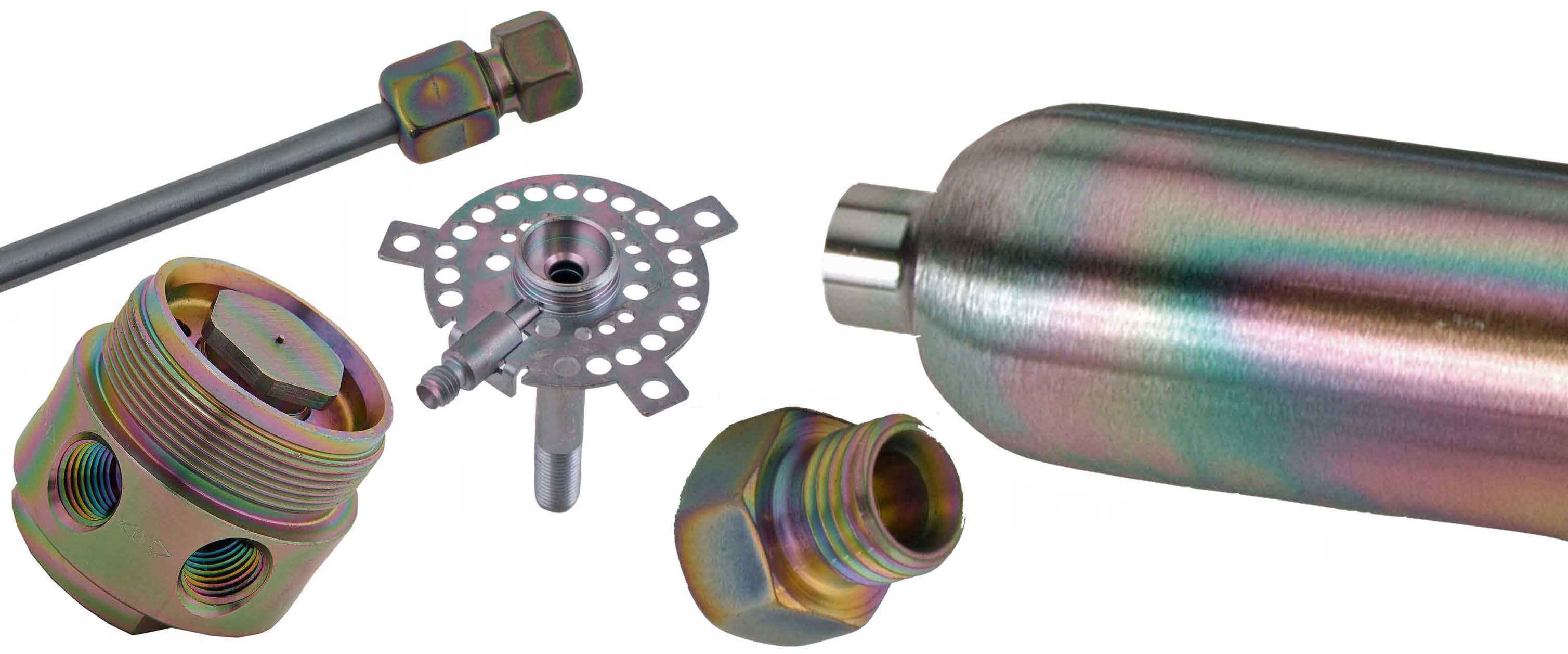
Unlike traditional coatings that sit on top of a surface, SilcoTek coatings are deposited through a proprietary CVD process that creates an extremely uniform, conformal layer throughout complex geometries, including tubing, valves, regulators, fittings, and other difficult-to-coat components.
 The filter above shows that all surfaces are fully coated.
The result is a surface engineered to deliver enhanced performance while preserving the strength, dimensional stability, and mechanical properties of the original component.
Depending on the coating selected, SilcoTek technologies can provide:
- Increased chemical inertness
- Reduced analyte adsorption
- Improved corrosion resistance
- Enhanced cleanliness
- Lower particle generation
- Hydrophobic or hydrophilic surface properties
- Improved wear performance
These benefits help customers improve process reliability without redesigning equipment or switching to expensive specialty alloys.
Surface Engineering for Analytical Applications
One area where surface engineering delivers significant value is analytical instrumentation.
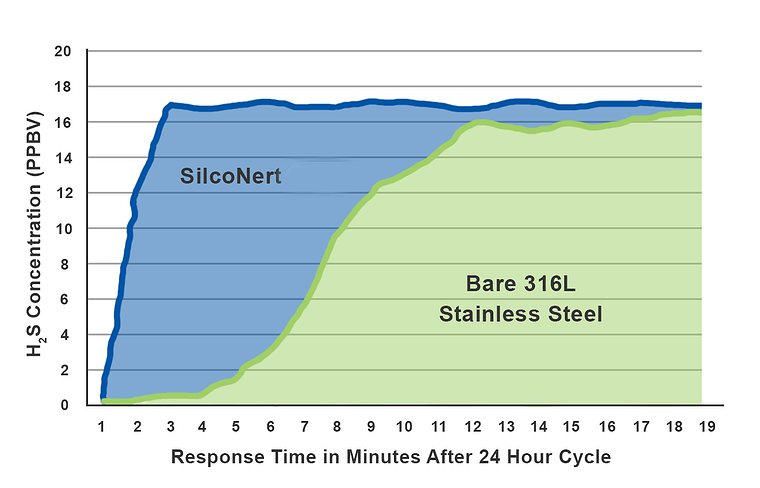
When trace compounds contact bare metal surfaces, they can adsorb, react, or decompose before reaching the detector. This leads to inaccurate measurements, poor recovery, longer stabilization times, and inconsistent results.
Surface-engineered components help eliminate these interactions by creating a chemically inert barrier between the sample and the metal substrate.
This is particularly important when measuring reactive compounds such as:
- Sulfur species
- Mercury
- Ammonia
- Aldehydes
- Organic acids
- Moisture-sensitive compounds
By controlling surface chemistry, laboratories and process facilities can improve data quality while reducing maintenance and troubleshooting efforts.
Surface Engineering Versus Material Replacement
A common question engineers face is whether to upgrade the material or modify the surface.
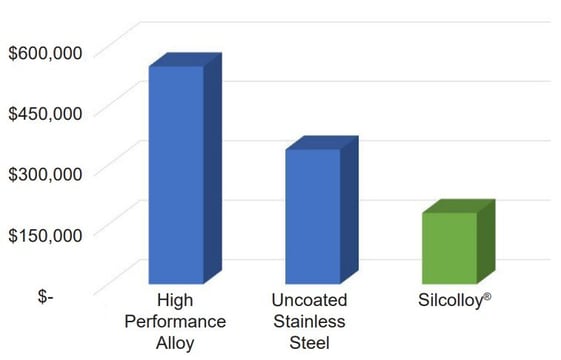
In many cases, surface engineering offers significant advantages over replacing the entire component with a more expensive alloy.
Surface engineering can:
- Reduce material costs
- Preserve existing component designs
- Improve performance without sacrificing strength
- Extend equipment life
- Minimize supply chain challenges associated with specialty metals
Rather than choosing between performance and cost, surface engineering allows manufacturers to optimize both.
The Future of Surface Engineering
As industries demand greater precision, higher purity, and longer equipment life, surface engineering continues to become more important.
Emerging technologies in energy production, semiconductor manufacturing, advanced analytics, and life sciences increasingly rely on engineered surfaces to overcome challenges that conventional materials cannot solve alone.
The future of product performance is not just about selecting better materials. It's about designing better surfaces.
At SilcoTek, surface engineering is at the core of what we do. By modifying surface chemistry at the molecular level, our coatings help customers improve corrosion resistance, increase inertness, reduce contamination, and unlock performance that would otherwise be difficult to achieve with conventional materials.
Whether you're working with analytical instruments, semiconductor equipment, process systems, or critical manufacturing components, surface engineering can help you get more from the materials you already use.