Semiconductor manufacturing demands exceptional precision. As device geometries continue to shrink and process requirements become more stringent, even microscopic levels of contamination can affect product quality, wafer yield, and equipment reliability. While much attention is given to cleanrooms, filtration, and process control, one factor that is often overlooked is corrosion within the process equipment itself.
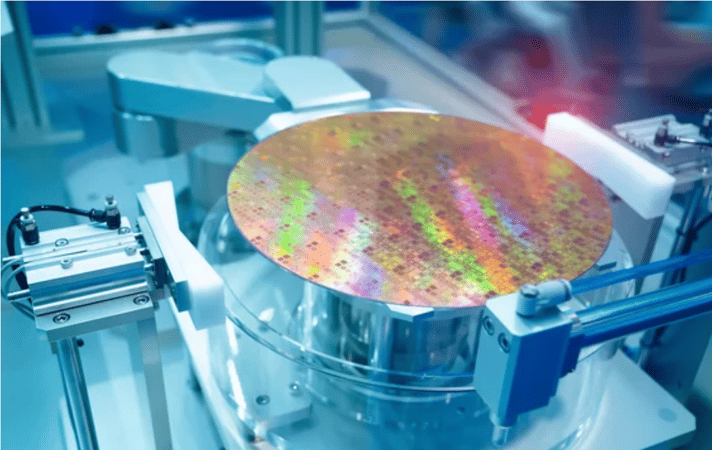
From specialty gas and chemical delivery systems to process exhaust lines, stainless steel surfaces are routinely exposed to highly aggressive chemistries. These challenges can occur on both sides of the process chamber: as specialty chemistries are delivered into the chamber and as fluorine- or chlorine-related chemistries and process byproducts are carried out through the exhaust system. Over time, these environments can attack metal surfaces, leading to corrosion, contamination, and costly maintenance.
Understanding where corrosion occurs and how to minimize it is an important part of maintaining reliable semiconductor manufacturing operations.
Why Corrosion Matters
Corrosion is more than an equipment maintenance issue. In semiconductor manufacturing, even minor surface degradation can have significant consequences.
When stainless steel corrodes, metal ions and corrosion byproducts may be released into the process stream. Surface damage can also create sites where particles accumulate or contaminants become trapped. These effects can contribute to reduced process consistency, increased cleaning requirements, and, ultimately, lower wafer yields.
Corrosion can also shorten the service life of expensive components, increasing maintenance frequency and unplanned downtime. For manufacturers operating around the clock, replacing critical components more often than necessary adds both direct costs and production interruptions.
Two areas where these challenges are particularly common are gas and chemical delivery into the process chamber and gas and chemical exhaust out of the chamber. While both involve corrosion control, the chemistries and conditions encountered on each side of the chamber can be very different.
Common Corrosive Chemistries in Semiconductor Processing
Semiconductor fabrication relies on a wide range of aggressive chemicals, each presenting unique challenges for process equipment.
Strong Acids
Acids such as hydrochloric acid (HCl), sulfuric acid (H2SO4), nitric acid (HNO3), and hydrofluoric acid (HF) are widely used for wafer cleaning, oxide removal, and etching processes.
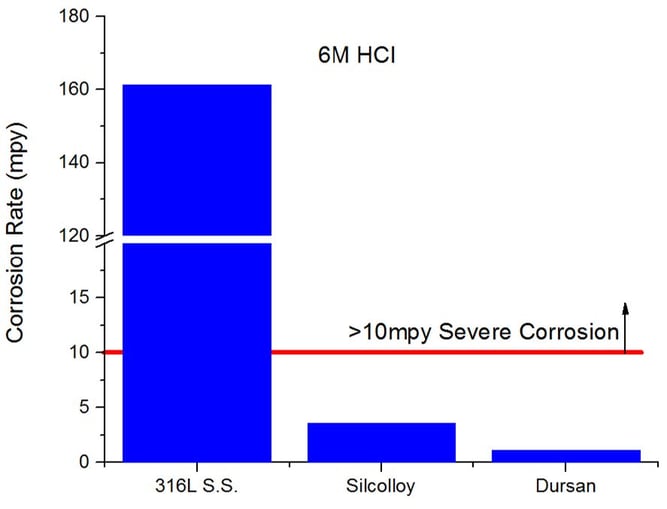
These chemicals can attack stainless steel surfaces over time, particularly in applications involving elevated temperatures or repeated exposure. While stainless steel offers excellent corrosion resistance in many environments, aggressive semiconductor chemistries can eventually compromise the passive oxide layer that protects the underlying metal.
Caustic Solutions
High pH chemicals such as sodium hydroxide (NaOH), potassium hydroxide (KOH), and ammonium hydroxide are commonly used throughout semiconductor manufacturing for cleaning and surface preparation.
These solutions can present their own corrosion challenges, especially when equipment is subjected to repeated cleaning cycles or continuous chemical exposure. Maintaining both corrosion resistance and nonstick surface properties is particularly important in these applications to reduce residue buildup and simplify cleaning.
Chemical Mechanical Planarization (CMP) Slurries
CMP processes introduce an additional challenge by combining chemically aggressive fluids with abrasive particles.
This combination can produce both chemical corrosion and mechanical wear. Components that transport or contain CMP slurries must withstand harsh conditions while minimizing particle generation and contamination.
Specialty Process Gases
Many semiconductor manufacturing processes utilize reactive gases containing chlorine, fluorine, bromine, ammonia, and other corrosive compounds. Gas delivery systems must maintain high purity while resisting long-term chemical attack.
Even slight surface reactions can affect process consistency or contribute unwanted contaminants into ultra high purity systems.
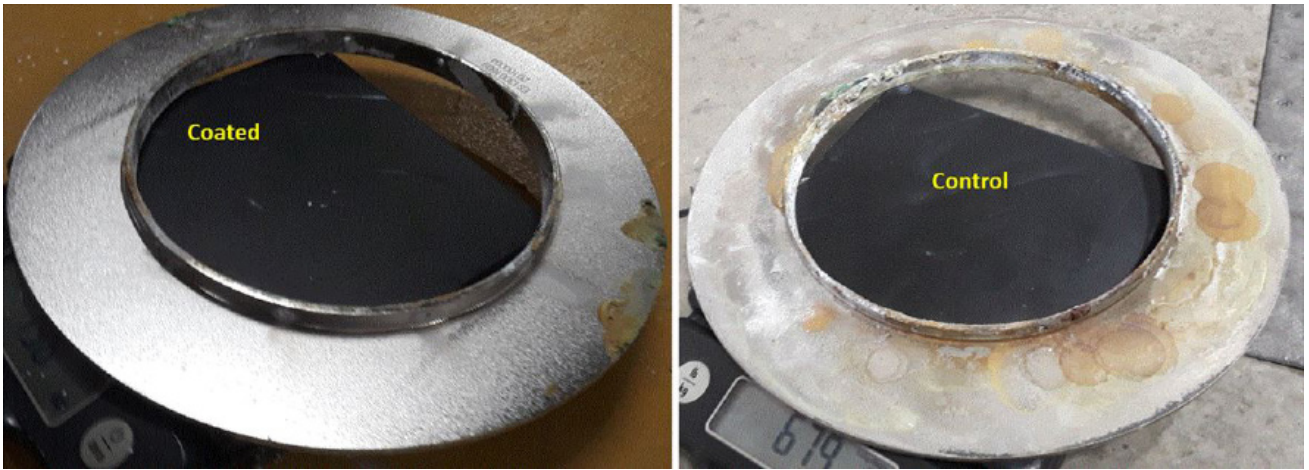
The above quenching sleeves provided by Samsung demonstrate the corrosion protection benefits of Siltride. Corrosion and degradation are present on the uncoated (right) quenching sleeve after 42 days, while the Siltride-coated (left) component only shows minor stains.
Where Corrosion Commonly Occurs
Corrosion can affect components throughout both the delivery and exhaust flow paths. Looking at these systems from an "into chamber" and "out of chamber" perspective helps identify where additional surface protection may be beneficial. Some of the most common areas include:
Into the chamber:
- Tubing and transfer lines
- Valves
- Regulators
- Fittings
- Manifolds
- Filters
- Gas delivery components
Out of the chamber:
- Exhaust lines
- Valves
- Fittings
- Pumps
- Forelines
- Exhaust manifolds
- Other downstream components
Because these components often represent the first surfaces that chemicals encounter, their condition plays a critical role in maintaining process purity.
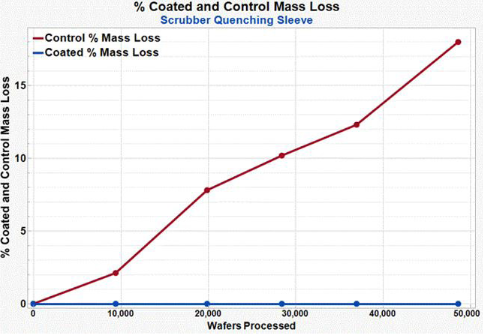
The above graph references continued on-site monitoring of the aforementioned quenching sleeves after 70 days of operation. Siltride maintains its stellar results and shows no mass loss while the uncoated control part has lost 18% of its initial mass. This performance allows Samsung to operate at the highest level without worrying about contamination or stopping production to replace corroded parts.
The Cost of Surface Degradation
As corrosion progresses, the effects extend beyond the component itself.
Surface roughness increases, creating additional locations where particles and contaminants can accumulate. Cleaning becomes more difficult, maintenance intervals become shorter, and replacement costs continue to rise.
In semiconductor manufacturing, where process repeatability is essential, these seemingly small changes can have measurable impacts on production efficiency and product quality.
/Dursan%20v%20HPA%20cost.png?width=724&height=557&name=Dursan%20v%20HPA%20cost.png)
Strategies for Reducing Corrosion
Managing corrosion begins with understanding the chemistry and operating conditions of the application and selecting appropriate materials for the flow path. Stainless steel remains an excellent choice for many semiconductor systems, but highly aggressive specialty chemistries and process exhaust conditions can exceed the corrosion resistance of an unprotected metal surface.
However, material selection alone may not provide sufficient protection in the industry's most demanding environments.
Protective barrier coatings can provide an additional level of defense by isolating the stainless steel substrate from aggressive chemicals. Unlike sacrificial coatings that wear away over time, chemically bonded CVD coatings create an ultra thin, conformal barrier that maintains the dimensional accuracy of precision components while improving surface performance.
The appropriate solution depends on the specific process chemistry, operating conditions, and performance requirements.
How SilcoTek Coatings Help
SilcoTek's chemical vapor deposition (CVD) coatings are engineered to improve the performance of stainless steel components used in demanding semiconductor applications.
Depending on the application, SilcoTek coatings can provide benefits such as:
- Improved corrosion resistance against aggressive process chemistries
- Reduced metal ion leaching from stainless steel surfaces
- Lower risk of contamination from reactive surface interactions
- Easier cleaning and reduced residue buildup
- Longer service life for critical process components
- Improved reliability in high purity fluid handling systems
SilcoTek coatings can be applied to components throughout both sides of the semiconductor process flow. In gas and chemical delivery systems, coated surfaces can help protect the underlying metal from aggressive specialty chemistries while maintaining a high purity flow path. In exhaust systems, corrosion resistant coatings can provide a protective barrier between the metal substrate and aggressive fluorine- or chlorine-related chemistries and process byproducts.
Building More Reliable Semiconductor Systems
As semiconductor manufacturing continues to evolve, corrosion control must extend across the entire process flow. Specialty gases and chemicals must be transported reliably into the process chamber, while aggressive chemistries and process byproducts must be safely carried out through the exhaust system.
Although the conditions on either side of the chamber are different, protecting exposed metal surfaces can help reduce corrosion, contamination, maintenance requirements, and premature component failure. By considering surface chemistry alongside base material selection, semiconductor manufacturers and equipment suppliers can build cleaner, more durable, and more reliable delivery and exhaust systems.
Have questions about your corrosion applications? Contact our coating experts today!
Follow Us on Social Media!