Passivation is one of the most widely specified post fabrication treatments for stainless steel components, yet it is often misunderstood. For manufacturers operating in semiconductor processing, analytical instrumentation, life science applications, and energy systems, proper passivation is not just a finishing step. It is a critical control point that directly influences corrosion resistance, cleanliness, and long term performance.
What Is Passivation?
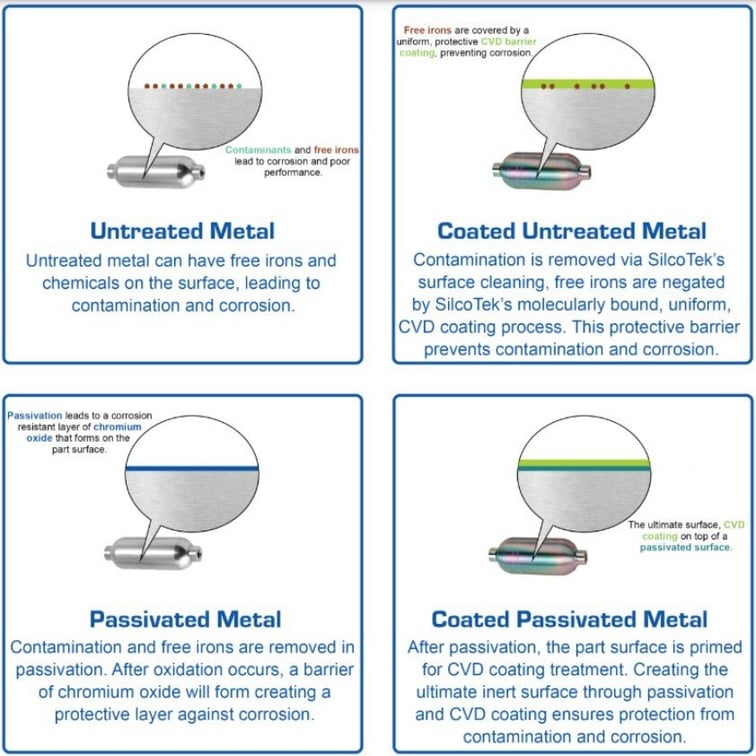
Passivation is a chemical treatment process that enhances the natural corrosion resistance of stainless steel. Although stainless steel is inherently corrosion resistant due to its chromium content, fabrication processes such as machining, welding, and forming can disrupt the protective chromium oxide layer and introduce free iron contamination onto the surface.
Traditional passivation treatments, typically using nitric or citric acid solutions, remove free iron and promote the reformation of a chromium rich oxide layer. This thin, invisible film acts as a barrier between the metal substrate and the environment, significantly reducing the likelihood of rust and localized corrosion.
Why Corrosion Starts on Stainless Steel
Stainless steel corrosion often begins at the surface. During manufacturing, embedded iron particles, heat tint from welding, or mechanical abrasion can create sites where corrosion initiates. These microscopic defects can lead to:
- Pitting corrosion
- Crevice corrosion
- Surface staining and rust bloom
- Premature component failure
Even high grade alloys can underperform if surface chemistry is compromised. In high purity or corrosive environments, such as those encountered in chemical processing or semiconductor manufacturing, small surface inconsistencies can have huge consequences.
How Passivation Improves Corrosion Resistance
Passivation improves corrosion resistance by selectively removing surface contaminants and allowing chromium in the alloy to react with oxygen to form a stable chromium oxide layer. This passive layer is self healing in the presence of oxygen, but only if the underlying surface is clean and properly conditioned.
The benefits include:
- Improved resistance to oxidation and rust
- Reduced risk of pitting initiation
- Enhanced cleanliness for high purity systems
- Greater long term durability
For industries that rely on consistent surface chemistry, passivation provides a predictable and standardized method to improve material performance.
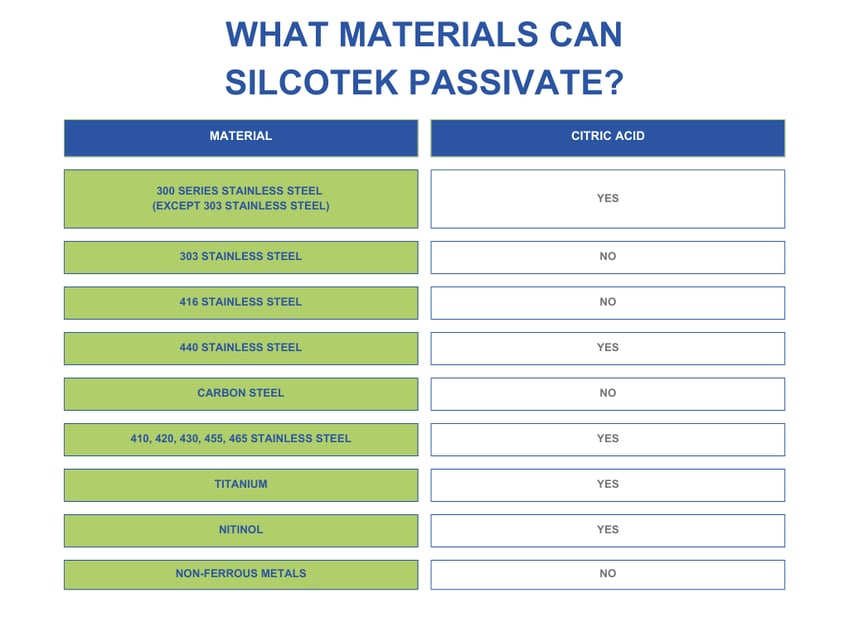
SilcoTek coatings in addition to our citric acid passivation services, provide the ultimate defense against corrosion and contamination.
Limitations of Traditional Passivation
While conventional passivation treatments are effective, they are not permanent coatings. The passive layer is extremely thin and can be damaged by mechanical wear, aggressive chemicals, or high temperature exposure.
In demanding applications, such as corrosive gas delivery systems or components exposed to halogens, acids, or elevated pressures, traditional passivation may not provide sufficient long term protection. In these cases, enhanced surface engineering solutions may be required to go beyond basic oxide layer formation.
Modern Barrier Coatings as an Advanced Alternative
Advanced chemical vapor deposition coatings, such as those developed by SilcoTek, build upon the concept of passivation by creating an ultra thin, inert barrier layer over the stainless steel surface.
For example, Dursan is a silicon based coating applied via CVD that forms a dense, amorphous barrier. Unlike traditional passivation, which relies on native oxide formation, Dursan creates a conformal coating that:
- Provides enhanced corrosion resistance in harsh environments
- Reduces metal ion leaching
- Improves chemical inertness
- Maintains dimensional tolerances due to its thin film nature
Similarly, Silcolloy is designed for high temperature and highly corrosive applications where traditional passive films may degrade.
These modern thin film barrier coatings complement or exceed the benefits of passivation, particularly in environments where long term chemical stability is essential.
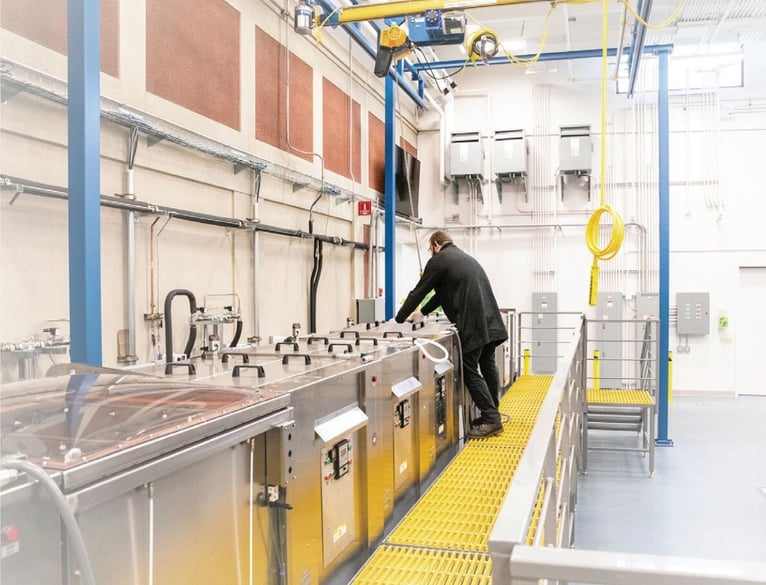 SilcoTek's citric acid passivation line.
Where Passivation Matters Most
Passivation is especially important in industries where corrosion impacts safety, purity, and reliability. Examples include:
- Analytical instrumentation, where surface activity can affect trace level measurements
- Life science systems, where metal ion contamination must be minimized
- Semiconductor manufacturing, where ultra clean gas delivery is critical
- Oil and gas operations, where corrosive fluids challenge material durability
In each of these sectors, surface chemistry is not just a materials concern. It is a performance requirement.
Passivation as Part of a Broader Surface Strategy
Passivation should not be viewed as a checkbox item. It is a foundational step in corrosion control. However, as operating conditions become more aggressive and performance expectations increase, manufacturers are reevaluating whether traditional acid passivation alone is sufficient.
For many high performance applications, combining proper material selection, controlled fabrication practices, and advanced barrier coatings offers a more comprehensive approach to corrosion resistance.
Understanding the role of passivation is the first step. Evaluating whether enhanced surface engineering is necessary for your specific environment is the next.
Have questions about coatings and passivation? Contact our knowledgeable coating experts today!
Follow Us on Social Media!